|
|||||
 |
Message from Senator Alain Destexhe, ICG President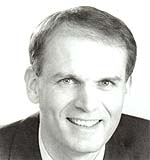 Alain Destexhe became President of ICG on 15 October 1997. A former Secretary-General of M�decins Sans Fronti�res International, he is currently serving in the Belgian Senate. In recent years he has written widely on humanitarian affairs, in particular drawing attention to the political impact of humanitarian action.
I first heard about the International Crisis Group in late 1995, when an ICG report passed across my desk on the situation in Sierra Leone. At the time I was intrigued by an organisation that was on the ground in some of the world's most troubled countries not to hand out food parcels or medicine or deliver other forms of emergency relief, but to gather information, generate ideas and press governments and others in the international community to take the difficult political decisions necessary to address the causes of a given crisis. My support for ICG's approach is reinforced by my own experiences. After 13 years with the medical relief organisation M�decins Sans Fronti�res I have come to realise that humanitarian assistance is often necessary but never sufficient. Worse, it has all too-often been used as an alibi for political inaction. In Bosnia, before Dayton, the international community comforted itself by feeding a population that was actually crying out for protection. The human massacre that followed in Srebrenica was evidence of this misguided approach. Similarly, in Rwanda, the world fell silent as almost a million people were slaughtered in the 1994 genocide, and only afterwards responded by ordering a multi-million dollar humanitarian aid operation to help the refugees. That operation, many now believe, actually aggravated the political situation by giving rise to a newly de-stabilised and highly militarised zone on the border between Rwanda and eastern Zaire. In central Africa we are continuing to pay the price for mistakes made in Rwanda in 1994. I believe the lesson of past policy failures is that we need to find ways to respond to complex crises that combine humanitarian relief with more effective and determined political action. This is where ICG can, I believe, make its most useful contribution. By keeping its analysts on the ground for prolonged periods of time, the organisation is well-placed to diagnose problems and prescribe specific policy responses. Meanwhile, the experience and international reputation of many of ICG's Board members helps the organisation to transmit its message to an influential global audience. It is a great pleasure to take over the leadership of ICG, particularly at such a vital moment in its development. Much has been achieved already by my predecessors. Much remains to be done. Over the coming year we are committed to launching, in addition to our existing projects, new initiatives in the Democratic Republic of Congo, Rwanda, Burundi, Algeria and Cambodia. It will be an exciting period-one that will no doubt test the limits of our new approach and, I trust, demonstrate its benefits. I am extremely grateful for the support and confidence of the staff and Members of the Board as well as our loyal funders. Without them, none of this would be possible.
|
||||


